


Struggling to navigate the CRM software pricing maze? Understanding CRM costs can be a nightmare for any business. This guide will break down the pricing of the top CRM tools of 2026 so you can make an informed decision that fits your budget and business. Whether you’re a growing business looking to simplify customer interactions or an enterprise looking to supercharge your customer management, knowing about the CRM software price is key.
Let’s get into the different factors that affect these costs and find the best CRM for you
Factors Influencing CRM Costs in 2026
Here are the factors that affect the CRM software price. Knowing these will help you choose the right CRM for your business without breaking the bank.
Features and Functionality:
Basic features: It has features like contact management, email integration, and task management. These are the essentials for any CRM and form the core offering to ensure all customer interactions are tracked and managed.
Advanced features: It has features like automation, advanced analytics, and multi-channel support. These will boost productivity, give you deeper insights, and automate routine tasks, but they will cost more.
You might find this interesting: Top 10 CRM Features That Actually Help Growing Businesses [With Customer Stories]
Number of Users:
Small teams: This is paying minimal if only a few users are involved. For example, a team of 5 will find a plan that’s cost-effective for their size and can manage customer relationships without financial strain.
Larger teams: Here, you need to see the cost scale with the number of users. A team of 50 or more will need to budget more to accommodate their needs, as the Cost per user adds up quickly and impacts the overall budget.
Deployment Type:
Cloud-based solutions: They have lower upfront costs but recurring monthly fees. These are easier to scale and manage remotely, so they are good for businesses that want flexibility and remote access.
On-premises deployments require a big upfront investment in infrastructure and ongoing maintenance costs. They offer more control over data and customization but at a higher upfront cost, so good for businesses with specific needs and bigger budgets.
Support and Customization:
Basic support: included in most CRM software price plans and provides standard support during business hours. This means users can get help with common issues without extra Cost.
Enhanced support and customization: cost more. This includes 24/7 support, dedicated account managers, tailored solutions to fit your business processes, a higher level of service, and customization for businesses that need it.
With a grasp on what affects CRM costs, it’s essential to explore the different pricing models available in the market.
Different Types of CRM Pricing Models
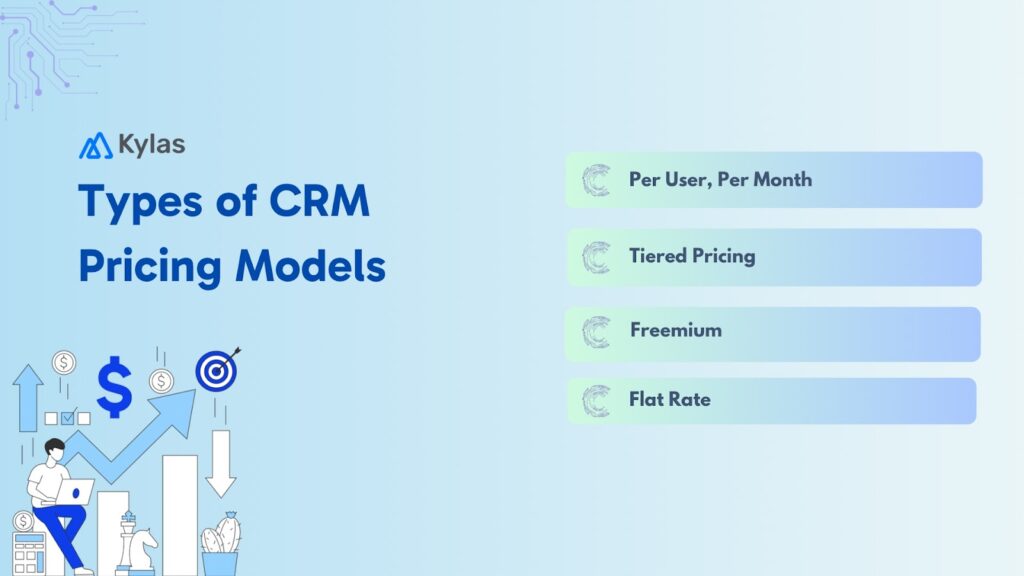
CRM providers offer different pricing models to suit different business needs. Knowing these models will help you choose the best one.
Per User, Per Month:
Monthly fee for each user: This is the most popular model, where you pay per user per Month. For example, a small business with 10 users will pay $200 per Month if the Cost is $20 per user. This is scalable as your business grows.
Tiered Pricing:
Levels of service at different price points: This model offers different levels of service at different CRM software price points. A company can start with a lower level and upgrade as it grows, so you can scale and budget according to your business needs.
Freemium:
Basic services for free, with paid upgrades: This model allows you to use basic CRM features for free and upgrade as needed. It’s a great way to try the CRM before committing, so a risk-free entry point for small businesses and startups.
Flat Rate:
One price for all users: Used by smaller businesses to manage costs. For example, a flat rate might be $500 per Month for up to 50 users, so you know exactly what you’re paying without worrying about user numbers and can budget and plan.
Having discussed the various pricing models, let’s examine the typical CRM software price ranges and their suitability for different types of businesses.
Typical CRM Software Price Ranges and Suitability
Understanding the typical CRM software price ranges and their suitability helps in selecting the right CRM software for your business.
Small Businesses:
Price Range: Approximately $10 – $50 per user/Month. This range covers the basics needed for startups and small teams to manage customer relationships without breaking the bank and to get a good ROI.
Medium Businesses:
Price Range: Approximately $50 – $150 per user/month. This range includes advanced features and integrations for growing companies. These features support more complex business processes and help scale operations efficiently, providing tools for growth and expansion.
Large Enterprises:
Price Range: Approximately $150 – $300+ per user/month. Full-featured CRMs in this range offer customization, advanced analytics, and dedicated support. These are best for large companies with multiple and complex requirements, high performance, and scalability.
To provide a clearer picture, let’s compare the pricing of some of the top CRM software options available today.
CRM Software Price Comparison
To provide a clear comparison, we have compiled a detailed pricing table of leading CRM software solutions:
CRM Software Price Table:
| CRM Software | Plan | Price (per user/month) | Features |
|---|---|---|---|
| Kylas Sales CRM | Embark | Free | Basic features include unlimited users and up to 1,000 records. |
| Elevate | ₹12,999/month | Advanced features include unlimited users and up to 100,000 records. | |
| Exceed | Custom Plan | Get all the features in Elevate, plus add-ons with an Account Manager and phone support. | |
| Salesforce | Salesforce Starter | $25 per user/month | A simple CRM suite covering marketing, sales, service, and commerce. |
| Salesforce Pro | $100 USD/user/month | A more flexible CRM suite with advanced tools across marketing, sales, and service. | |
| Salesforce Foundations | $0/month | Extend the existing CRM with add-on features, available for the Enterprise Edition. | |
| HubSpot CRM | Free | ₹0/month | Free for up to 2 users. No credit card required. |
| Starter | ₹752/month/seat | Essential marketing, sales, service, content, and data management software. | |
| Professional | ₹1,08,483/month | Comprehensive marketing, sales, customer service, content, and data management software. | |
| Enterprise | ₹3,92,000/month | Advanced marketing and data management software. | |
| Zoho CRM | Standard | ₹800/user/month (billed annually) | Basic CRM functionalities. |
| Professional | ₹1,400/user/month (billed annually) | Advanced features with more integrations. | |
| Enterprise | ₹2,400/user/month (billed annually) | Comprehensive CRM solutions. | |
| Ultimate | ₹2,600/user/month (billed annually) | All-inclusive features with premium support. |
While understanding the CRM software price and options is crucial, it’s also beneficial to know about available free trials and discounts that can make CRM solutions more affordable.
Take a look at this: Kylas Growth Plans [Unlimited Users (No per User Fees)]
Maximizing Value: Free Trials and CRM Discounts
Taking advantage of free trials and discounts can help businesses find the best CRM solution without committing upfront. Understanding how to leverage these opportunities can save high costs and ensure the chosen CRM fits your business needs.
Free Trials
Many CRM providers offer free trials, so you can try the software before you buy. This trial period is important for several reasons:
Assessing Features and Functionality:
-
- Hands-On Experience: Free trials give you the opportunity to try the CRM’s features and functionality for yourself. This hands-on experience is priceless for understanding how the CRM will support your business processes.
-
- Real-World Testing: By using the CRM in real-life scenarios, you can see if the software meets your operational needs. This testing can include integrating the CRM with other tools, customizing workflows, and assessing ease of use.
Evaluating User Experience:
-
- User Interface: A free trial allows you to try the user interface and overall user experience. A user-friendly CRM can increase productivity by making it easier for your team to navigate and use the system.
-
- Team Feedback: Get your team involved in the trial period and get feedback on the CRM’s usability and effectiveness. This collective input will help you make a decision.
Identifying Suitability:
-
- Fit for Business Needs: Free trials help you determine if the CRM fits your business needs. This includes checking if the CRM has industry-specific features and workflows.
-
- Cost-Benefit Analysis: You can do a cost-benefit analysis during the trial period, comparing the benefits of the CRM against the Cost. This will help you understand the ROI.
Discounts and Promotions:
CRM providers offer various discounts and deals to make premium CRMs more affordable. Here’s how to make the most of them:
Annual Subscriptions:
-
- Long-Term Savings: Many CRM providers offer big discounts for annual CRM software price plans compared to monthly CRM software price plans. Committing to a yearly plan means big savings over time.
-
- Budget Planning: Annual CRM software price plans give you better budgeting so that you can plan your finances better.
Bundling Services:
-
- Comprehensive Solutions: Providers offer discounts when you bundle CRM software with other services like marketing automation, customer support tools, or ERP systems. Bundling means a more integrated and cost-effective solution.
-
- Enhanced Value: Bundled services often come with more features and support, more value for your money.
Promotional Periods:
-
- Seasonal Discounts: CRM providers run promotions during specific times of the year, like the end of the quarter, Black Friday, or Cyber Monday. These are great times to get a deal.
-
- Introductory Offers: New customers get introductory discounts or extended trial periods. Keep an eye out for these offers to get started with less risk.
Negotiation Opportunities:
-
- Custom Discounts: Negotiate with CRM vendors and get custom discounts, especially if you commit to longer contracts or higher user counts. Vendors also offer flexible payment terms to suit your budget.
-
- Value-Added Services: Negotiation can also get you value-added services like extra training, dedicated support, or customization options at no extra cost.
Tailored Solutions: Industry-Specific CRM Pricing Insights
Different industries have unique requirements for CRM software, which can impact pricing. Here are insights into CRM costs for various sectors:
Edutech:
CRMs for Edutech companies often have features like student management, course tracking, and online communication tools. These CRM software prices can cost between approximately $20 to $100 per user/Month or even more, depending on the level of functionality and support required. These help manage student interactions and administrative tasks.
Fintech:
Fintech companies need CRMs with strong security features, compliance tracking, and financial integrations. CRM software prices can range from $50 to $200 per user/month or even more, as they need advanced security and regulatory compliance features. These fintech CRMs handle financial data securely and comply with industry regulations.
Manufacturing:
Manufacturing CRMs are focused on supply chain management, inventory tracking, and production scheduling. CRM software prices can range from $30 to $150 per user/Month or even more, based on the complexity of the manufacturing process and integration required. These features help streamline production workflows and productivity.
Travel:
Travel CRMs need features like booking management, customer communication tools, and itinerary planning. CRM software prices can range from $25 to $120 per user/Month or even more based on the depth of features and customer support. These CRMs manage travel bookings and customer experience.
Digital Marketing:
Digital marketing agencies need CRMs with campaign management, lead tracking, and performance analytics. These CRM software prices can cost from $15 to $100 per user/Month or even more, based on the need for detailed analytics and marketing automation. These digital marketing agency CRMs help optimize marketing campaigns and track performance.
Beyond the immediate costs, investing in CRM software can offer significant long-term value. Let’s explore these benefits in more detail.
Investing Wisely: Long-Term Value of CRM Solutions
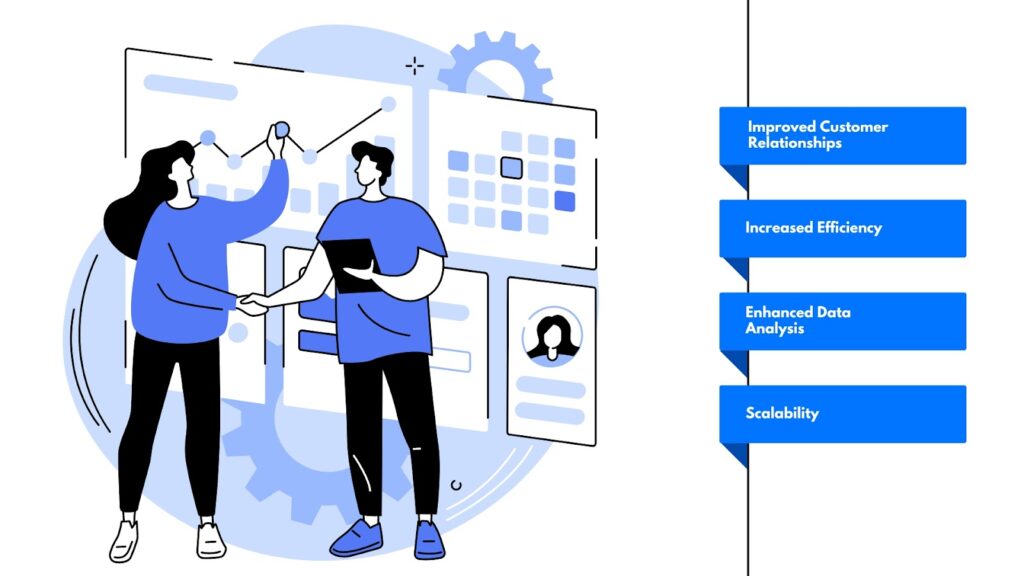
Investing in CRM software can offer significant long-term value:
-
- Improved Customer Relationships: CRMs keep a record of all customer interactions so you can provide better service and build stronger relationships. With a full view of customer history, you can personalize communication and improve customer satisfaction.
-
- Increased Efficiency: Automation of routine tasks frees up time for your employees to focus on more strategic activities, and overall productivity improves. By automating tasks like data entry and follow-ups, CRMs streamline business processes.
-
- Enhanced Data Analysis: CRM systems provide advanced analytics to give you insights into customer behavior so you can refine your marketing and sales strategies. These insights enable data-driven decision-making and better business performance.
-
- Scalability: As your business grows, CRMs can scale to more users and more complex processes, a long-term solution that grows with your business. Scalable CRMs mean you can use the same system as you expand.
When choosing a CRM solution, it’s essential to weigh the benefits and drawbacks of free versus paid options. Here’s a detailed comparison.
Free vs. Paid CRM Solutions: What’s Best for Your Business?
When considering CRM solutions, it’s essential to weigh the benefits of free versus paid options.
| Aspect | Free CRM Solutions | Paid CRM Solutions |
|---|---|---|
| Pros |
|
|
| Cons |
|
|
Additional Points:
Free CRM Solutions
-
- Scalability Issues: Free CRMs don’t scale as you grow, so you’ll need to switch to a paid one later on.
-
- Data Storage Limitations: Free CRMs often have limited data storage, which can be a problem if you have a lot of data.
-
- Ad-Supported: Some free CRMs show ads, which can be distracting and unprofessional.
Paid CRM Solutions:
-
- Enhanced Security: Paid solutions have advanced security to protect your customer data.
-
- Regular Updates: Paid CRMs get regular updates and new features, so the software stays current with industry trends.
-
- Integration with Advanced Tools: Paid solutions can integrate with more advanced marketing, analytics, and automation tools to create a more cohesive business ecosystem.
-
- Better Analytics: They have better analytics and reporting so that you can see deeper into customer behavior and business performance.
Now that we understand the options and CRM software prices, let’s look at some effective strategies for negotiating CRM pricing.
Negotiating CRM Software Price: Tips and Strategies
Negotiating CRM pricing can help businesses get the best value for their investment:
-
- Know Your Needs: Define your business needs before you start negotiating. This helps you focus on what you need and avoid unnecessary costs.
-
- Leverage Free Trials: Use free trials to test the CRM for your business. This will give you ammo for your negotiation.
-
- Ask for Discounts: Don’t be afraid to ask for discounts, especially for long-term commitments or bulk user licenses.
-
- Consider Bundled Services: Vendors often offer discounts for bundled services. Evaluate if these bundles meet your needs and offer better value.
-
- Negotiate Terms: Beyond CRM software price, negotiate terms like payment schedules, support levels, and customization options.
Small businesses have unique needs and budget constraints. Let’s explore some CRM solutions that are particularly suited for smaller enterprises.
CRM Software for Small Businesses
Small businesses have unique needs and budget constraints when it comes to CRM software:
-
- Affordable Options: Look for CRMs that offer basic features at a low cost. For example, Kylas CRM Starter is free, which includes unlimited users and up to 1,000 records. Cost-effective for small teams that need basic CRM features.
-
- Ease of Use: Choose CRMs with a simple interface that requires minimal training. This saves time and cost on onboarding.
-
- Scalability: Go for solutions that can grow with your business. Many affordable CRMs have upgrade paths as your needs evolve.
-
- Support: Look for providers that offer good support even at lower pricing tiers. Support is crucial for small businesses that don’t have in-house technical expertise.
Don’t miss out on this blog: CRM Implementation Cost: How Much is Enough For Small Businesses?
Evaluating the Long-Term Scalability of CRM Solutions
When choosing a CRM, you need to consider not only your current needs but also how the system will scale with your business as it grows. Here’s how to evaluate the long-term scalability of CRM:
Assessing System Performance:
-
- Capacity Handling: Can the CRM handle more records, users, and transactions without performance degradation? Scalability means the system can maintain performance as your data grows.
-
- Load Testing: Do load testing to see how the CRM performs under heavy usage. This will give you an idea of how the system handles peak loads and whether it can scale horizontally (add more servers) or vertically (upgrade existing servers).
Customization and Flexibility:
-
- Adaptability: Choose a CRM that has robust customization options to adapt to changing business processes. This includes customizing fields, workflows, and reports to fit future requirements.
-
- Module Additions: The CRM should support adding new modules and features without major disruptions. This flexibility means the system can accommodate new business needs as they arise.
Integration Capabilities:
-
- Third-Party Integrations: Ensure the CRM integrates with other business applications like ERP, marketing automation, and customer support tools. Integration is key to having a cohesive technology stack.
-
- APIs and Webhooks: Check if the CRM has APIs and webhooks to integrate with existing and future systems. APIs allow data exchange and process automation between different software applications.
Vendor Support and Roadmap:
-
- Vendor Reliability: Evaluate the vendor’s track record of supporting scalable solutions and their commitment to continuous improvement. Reliable vendors usually provide regular updates and enhancements.
-
- Product Roadmap: Review the vendor’s product roadmap to see if future developments align with your business growth plans. A clear roadmap means the vendor is committed to scalability and innovation.
Cost Implications:
-
- Pricing Tiers: Look at the CRM software price structure and how the Cost will scale as you add more users and data. Transparent CRM software price tiers help in budgeting for future growth.
-
- Hidden Costs: Be aware of the hidden costs of scaling, such as additional storage, advanced features, or premium support services.
How to Maximize CRM ROI: Tips and Strategies
When choosing a CRM, you need to consider not only your current needs but also how the system will scale with your business as it grows. Here’s how to evaluate the long-term scalability of CRM:
Define Clear Objectives:
-
- Specific Goals: Set specific goals for your CRM implementation, like customer retention, sales efficiency, or customer service. Clear goals give direction and measurable outcomes.
-
- Key Performance Indicators (KPIs): Identify KPIs to track towards your goals. Common KPIs are customer acquisition cost, customer lifetime value, and sales cycle length.
Ensure User Adoption:
-
- Training Programs: Invest in comprehensive training programs so all users know how to use the CRM properly. Trained employees will use the system more consistently and efficiently.
-
- User Engagement: Engage users by showing them the benefits of the CRM and incorporating feedback into system improvements. High user adoption is key to getting the most out of the CRM.
Leverage Automation:
-
- Automate Workflows: Use the CRM’s automation to automate routine tasks like follow-up emails, lead assignments, and data entry. Automation reduces manual work and errors.
-
- Sales and Marketing Automation: Implement sales and marketing automation to nurture leads, track customer interactions, and personalize communications. Automation increases productivity and timely follow-ups.
Utilize Data Analytics:
-
- Data-Driven Decisions: Use the CRM’s analytics to get insights into customer behavior, sales trends, and campaign performance. Data-driven decisions are more accurate and effective.
-
- Regular Reports: Generate regular reports to track against KPIs and identify areas to improve. Consistent reporting helps in making informed adjustments.
Integrate with Other Systems:
-
- Seamless Integration: Integrate the CRM with other business systems like ERP, email marketing, and customer support tools. Integration gives a single view of customer data and simplifies operations.
-
- Data Synchronization: Ensure data synchronization between the CRM and other systems to maintain data accuracy and consistency across platforms.
Continuous Improvement:
-
- Ongoing Training: Provide ongoing training and support to keep users updated on new features and best practices. Continuous learning increases user proficiency.
-
- Feedback Loop: Create a feedback loop to collect user feedback and make changes to the CRM system. User feedback is gold for continuous improvement.
Cloud-Based vs. On-Premises CRM: Choosing the Right Deployment
To help you decide between cloud-based and on-premises CRM solutions, here’s a comparison table highlighting the key benefits and considerations of each option:
| Aspect | Cloud-Based CRM | On-Premises CRM |
|---|---|---|
| Deployment | Hosted on the vendor’s servers and accessed via the internet. | Installed and run on the company’s own servers and network. |
| Initial Cost | Lower upfront costs, typically subscription-based pricing. | Higher upfront costs for hardware, software, and setup. |
| Scalability | Easily scalable, allowing users and storage to be added as needed. | Scalability depends on internal IT resources and infrastructure. |
| Maintenance | The vendor handles maintenance, updates, and security patches. | The in-house IT team is responsible for maintenance and updates. |
| Accessibility | Accessible from anywhere with an internet connection. | Limited to internal network access; a VPN is required for remote access. |
| Customization | Customization options depend on the vendor’s platform. | A higher degree of customization is controlled by the in-house team. |
| Data Control | Data stored on the vendor’s servers offers less direct control. | Full control over data storage and security. |
| Security | The vendor implements security measures and compliance standards. | Security is managed internally and can be customized to specific needs. |
| Updates | Automatic updates and new features are deployed by the vendor. | Updates must be manually installed and tested by the IT team. |
| Downtime and Reliability | High uptime guaranteed by the vendor, backed by SLAs. | Downtime and reliability depend on internal infrastructure and the IT team. |
| Integration | Easy integration with other cloud-based applications. | Integration with existing on-premises systems may be simpler. |
Choosing the Right Option:
-
- Cloud-Based CRM: For businesses that want flexibility, lower upfront costs, and minimal IT involvement in maintenance. Suitable for remote teams and companies that value accessibility.
-
- On-Premises CRM: For companies with specific security requirements, high customization needs, and the IT resources to manage the system internally. Suitable for industries with strict data control and compliance regulations.
Here’s something worth reading: All About Cloud CRM Software and Why Your Growing Business Needs One
Conclusion
Understanding the CRM software price and its variations is crucial for making an informed decision. This guide has thoroughly compared top CRM tools like Kylas, Salesforce, HubSpot, and Zoho, highlighting their pricing models and key features. Each CRM offers unique benefits tailored to different business sizes and requirements, from cost-effective solutions for small teams to comprehensive systems for large enterprises.
When selecting your CRM, consider your business size, specific needs, and budget to ensure you choose a tool that not only fits your current situation but also scales with your growth. By carefully evaluating these factors, you can maximize the return on your CRM investment, streamline your customer relationship management, and drive your business forward. Explore how Kylas CRM can cater to your specific business requirements, offering tailored solutions to enhance your customer management strategy. Make the smart choice today and choose Kylas Sales CRM that aligns with your business goals.
FAQs
Can I switch between CRM pricing plans as my business grows?
Yes, most CRM platorms allow you to upgrade or change plans as your needs evolve. This flexibility lets you add features, users, or storage without disrupting your existing data or workflows.
What should I consider when choosing a CRM tool based on pricing?
Look beyond the base price and evaluate features, user limits, scalability, integrations, and long-term costs. Choose a plan that meets your current needs while allowing room to grow.
Do CRMs offer customer support for all pricing tiers?
Most CRMs provide basic customer support across all plans, such as email or help center access. Higher-tier plans typically include faster response times, dedicated support, or onboarding assistance.
Are CRM tools with AI and automation more expensive?
CRM tools with AI and automation often come at a higher price because they offer advanced capabilities like predictive insights and workflow automation. However, these features can reduce manual work and deliver a strong ROI over time.
How can I compare CRM prices to find the best value for my business?
Compare pricing by matching features to your business needs rather than cost alone. Consider scalability, support quality, ease of use, and customer reviews to determine overall value.