




India’s entrepreneurial landscape is expanding at a rapid pace. According to Trade India, our nation is home to 6.33 crore (63.3 million) MSMEs, placing millions of business owners in one of the world’s most competitive environments. Whether you’re running a small team or planning a major expansion, understanding how to grow a business requires clarity, strategy, and the right systems.
This guide will walk you through the essential steps, tools, and timelines for creating a sustainable business growth plan and scaling with confidence.
What Are the First Steps to Grow a Business?

Growing a business begins with strong foundations. From defining your direction to establishing reliable processes, the early steps influence long-term success.
Define Your Vision and Goals
Growth requires intentional planning. A structured business development strategy helps you identify opportunities, measure progress, and make informed decisions.
Build a Strong Business Plan
Learning how to make a business plan ensures you have a roadmap for marketing, sales, finance, and operations. This clarity reduces confusion and strengthens decision-making.
Prioritise Customer Experience
Listening to your customers, iterating your product or service, and providing value early on builds trust and retention.
Strengthen Your Team
A committed, skilled team is essential for sustainable scaling. The right talent accelerates execution and customer satisfaction.
Streamline Your Sales Process
Consistent pipelines, proper lead tracking, and strong follow-ups form the backbone of every successful business growth strategy.
A Forbes report highlights that over 99% of these are micro-enterprises, demonstrating the scale and competitiveness faced by small businesses today.
How Does Automation Enhance Business Growth?
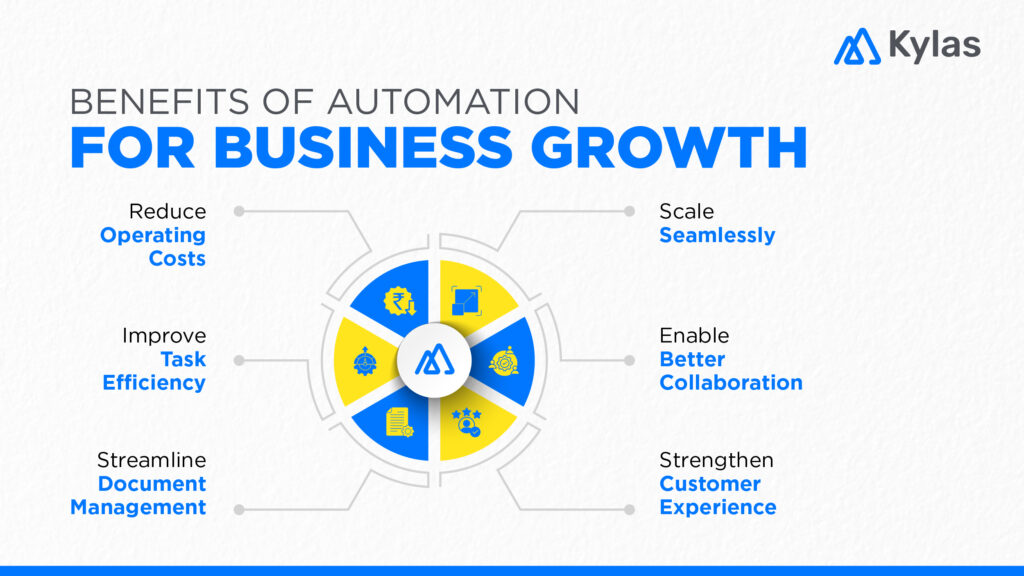
Automation is one of the most powerful enablers of business growth. McKinsey estimates that generative AI could automate activities that currently take up 60 to 70% of employees’ time. It reduces operational friction, increases productivity, and helps teams focus on more meaningful work.
1. Reduce Operating Costs
Automation replaces repetitive manual work, cuts down errors, and helps employees become productive faster. This leads to long-term savings on salaries, training, and corrections.
2. Improve Task Efficiency
Automated tools manage routine functions like social media posting, invoicing, reminders, communication, onboarding, and scheduling. This makes daily operations smoother and more effective.
3. Streamline Document Management
Digital document systems prevent data loss, improve security, support compliance, and make it easier to access and manage important files.
4. Scale Seamlessly
Automation grows with your business by handling increased workloads. You can also add more automation tools as your needs expand without putting strain on your team.
5. Enable Better Collaboration
When routine tasks are automated, teams can focus on strategic work. Cloud-based tools also support remote collaboration and help you hire from a wider talent pool.
6. Strengthen Customer Experience
Automation reduces stock issues, speeds up shipping, simplifies payments, and improves communication. This results in happier and more loyal customers.
What Tools Can Help Your Business Scale Faster?
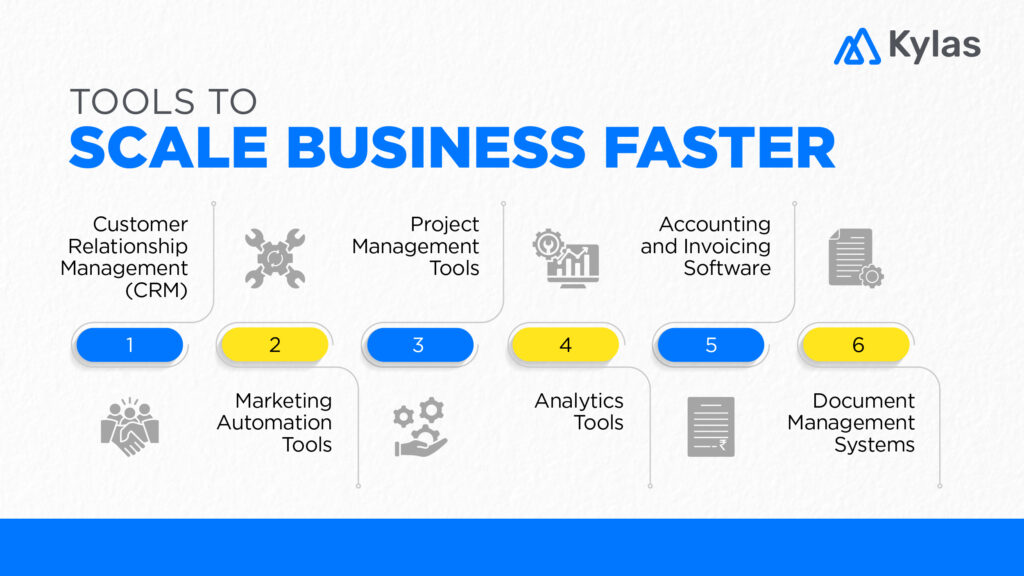
Scaling a business becomes significantly easier when supported by the right technology stack. Powerful tools streamline operations, improve communication, and strengthen overall performance.
1. Customer Relationship Management (CRM)
A CRM centralises contacts, tracks leads, automates follow-ups, and ensures pipeline visibility, essential elements of a strong marketing growth strategy and sales engine.
2. Marketing Automation Tools
From email campaigns to social media scheduling, automation ensures consistent and relevant outreach.
3. Project Management Tools
They improve teamwork, track tasks, and keep projects aligned with deadlines.
4. Analytics Tools
Data-backed insights help refine business growth strategies and uncover performance gaps.
5. Accounting and Invoicing Software
Automates billing, invoicing, and expense tracking, reducing errors and providing real-time financial insights for quicker decision-making.
6. Document Management Systems
Provide centralised, searchable storage and real-time collaboration, improving workflow and reducing paper-based clutter.
Harvard Business Review reports that 90% of workers say automation increased productivity, while 85% feel it strengthened team collaboration.
How Long Does It Take to See Business Growth Results?
Growth timelines vary, but strategic planning and consistent execution help businesses move faster through each stage.
Short-Term (0–3 Months)
You’ll notice improved internal clarity, better visibility into leads, and more structure in daily operations.
Medium-Term (3–9 Months)
Sales pipelines become more predictable, customer relationships strengthen, and revenue begins stabilising.
Long-Term (9+ Months)
Businesses experience sustainable scaling, improved profitability, and stronger market presence.
Thunderbit data shows that 66% of businesses have already automated at least one process, and adoption is expected to reach 85% by 2029.
Conclusion
Growing a business is a steady and structured journey. It requires a clear vision, a strong foundation, and the discipline to follow a well-defined business growth plan. When supported by the right tools, automation, and data-driven decision-making, businesses can scale faster, improve customer experience, and strengthen long-term stability.
As a Sales CRM trusted by 5000+ growing businesses, we, at Kylas, understand the challenges small businesses face every day.
Our workflow automation is built to support busy teams. By automating routine tasks, we ensure your team can focus on what truly matters: building relationships and closing deals.
The businesses that invest in strong processes and smart automation today will be the ones leading their industries tomorrow, and we’re committed to being a part of that journey with you.