







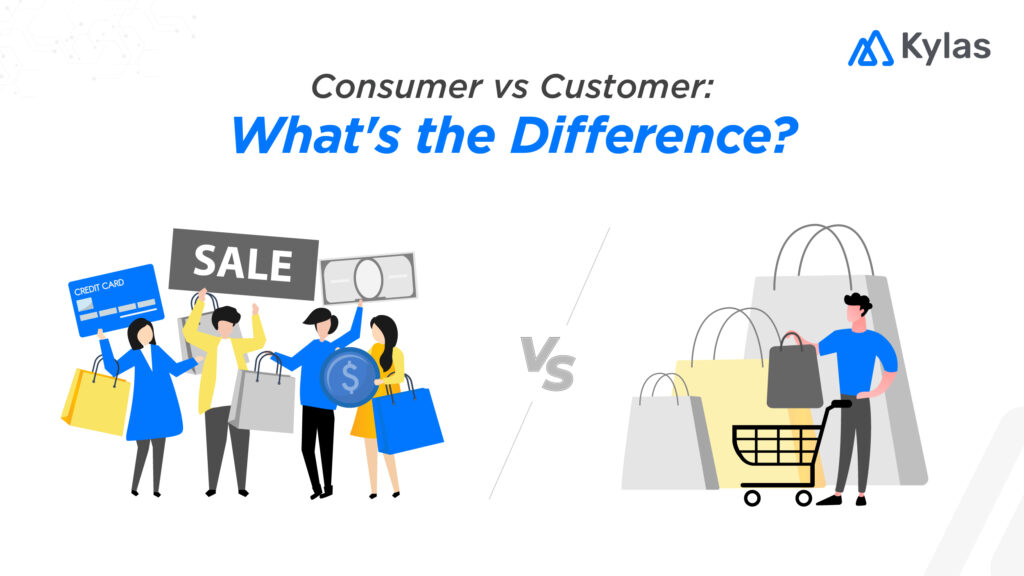
Consumer vs Customer: What’s the Difference?
Posted on December 12, 2025 by Amura Tech
In the world of sales and marketing, the terms “consumer” and “customer” are often used interchangeably. However, understanding the difference between the two is essential for any business looking to optimise its customer journey and boost its revenue. While both consumers and customers are critical to your business, they play distinct roles. This distinction is crucial for crafting marketing messages, sales strategies, and CRM strategies that effectively engage both groups.
In this blog, we’ll explore the difference between consumers and customers, why it matters in marketing, and how businesses can leverage this understanding to build more effective, data-driven strategies.
What Is a Customer?
At its core, a customer is the individual or organisation that purchases a product or service. In a B2B (business-to-business) context, the customer is the buying organisation, or more specifically, the economic buyer within that organisation- the person who has the authority to approve or make purchases. In B2C (business-to-consumer) markets, the customer is typically the individual who completes the transaction, either online or in-store.
Customers are the foundation of a business’s revenue. Their purchasing decisions are often driven by factors such as price, value proposition, and service offerings. These decisions may be influenced by long-term goals such as cost savings, efficiency improvements, or the desire to access a high-quality product or service.
Points to Remember:
- A customer is the one who pays for the product or service.
- In B2B, this is typically the organisation or the economic buyer.
- In B2C, the customer is the individual who buys the product.
What Is a Consumer?
A consumer, on the other hand, is the end user who actually consumes or uses the product or service. While the consumer and customer are often the same in B2C markets (e.g., a person who buys a product is also the one using it), this is not always the case in B2B transactions.
In a B2B setting, the consumer may not be the person or organisation making the purchase decision. Instead, it could be an employee or user within the company who actually uses the product or service purchased by the organisation. In this case, the economic buyer is different from the consumer. The buyer is concerned with cost and compliance, whereas the consumer prioritises usability and functionality.
Points to Remember:
- A consumer is an individual who uses or experiences a product or service.
- In B2B, the consumer could be the employees or users of the purchased product.
- In B2C, the consumer is usually the same person as the customer.
Key Differences Between Consumer and Customer
To further clarify, let’s look at some key distinctions between consumers and customers in both B2B and B2C contexts.
| Aspect | Customer | Consumer |
| Role | Purchases the product or service | Uses or experiences the product |
| Primary Focus | ROI, value for money, business needs | Usability, satisfaction, outcomes |
| Metrics | Revenue, LTV, contract terms | Adoption, NPS, feature usage |
| Sales Process | Lead generation, pricing, and contracts | Onboarding, engagement, support |
| Example | CFO, Procurement, VP of Sales | Sales reps, engineers, end users |
Why the Difference Matters in Marketing
Understanding the distinction between customers and consumers is key for businesses to develop effective marketing strategies. Here’s why:
1) Tailored Messaging: The messaging you use for customers and consumers should vary greatly. When marketing to customers, your focus will be on business value, cost savings, and long-term ROI. For example, in B2B, your customer (economic buyer) will be interested in how your product can help their business achieve operational efficiency or improve profitability.
On the other hand, when marketing to consumers, the focus shifts to how the product will directly benefit them in their daily tasks. For example, the consumer (employee or end user) will want to know how easy the product is to use, how it improves their productivity, and whether it provides the outcomes they need.
2) Customer Journey: The customer journey for the economic buyer will typically revolve around research, comparisons, pricing, and negotiations. For consumers, however, the journey will focus on onboarding, training, support, and product usage.
When developing your CRM or sales strategy, it’s crucial to understand that the buying journey is not linear. For customers, it might take months of decision-making and negotiation before a purchase is made. For consumers, the journey is more immediate: they are typically looking for fast adoption and ease of use.
3) Data Segmentation and Targeting: By clearly marking the difference between customers and consumers, businesses can segment their data more effectively. Marketing automation tools can be used to design separate email workflows or CRM sequences that target customers with ROI-centric messaging and offer consumers personalised product tips, support, and features based on their usage patterns.
How Businesses Should Approach Both
Businesses need to approach customers and consumers differently in terms of both sales and marketing strategies. Here’s how:
1. CRM Strategies: Implement clear role-based access control within your CRM system to differentiate between customers and consumers. This will allow you to track both purchasing decisions and user behaviour separately. For example, customers can be tagged with business-related data (e.g., company name, annual revenue), while consumers can be tagged with usage-related data (e.g., adoption rates, feature usage).
2. Personalisation: While customers care about business value, consumers care about user experience. Segment your customer base to personalise marketing and sales efforts. Customers may receive content focused on ROI and enterprise-level benefits, while consumers may benefit more from product tips, training materials, and adoption best practices.
3. Sales and Support Alignment: Make sure your sales and support teams are aligned to cater to both the customers and consumers within each organisation. For customers, your sales team should be focused on making a compelling business case. For consumers, your support team should be equipped to handle technical queries and drive product adoption.
The Evolution in the Digital Era
In today’s digital landscape, the line that marks the difference between customer and consumer is becoming increasingly blurred, especially with the rise of e-commerce, self-service models, and personalisation.
Today, personalisation is key, with 71% of customers expecting personalised experiences, and 76% feeling frustrated when brands fail to deliver them. This growing expectation is one reason modern CRM and AI systems must separately track buyer intent (customer) and actual product usage behaviour (consumer). Without this distinction, brands cannot personalise communication, onboarding, or support at scale.
For example, product-led growth strategies have turned consumers into influencers in the buying process. They often have a significant impact on purchasing decisions, as their feedback shapes the product’s success and their organisation’s buying decision.
Additionally, with tools like CRM systems and AI-powered marketing automation, businesses can now track both buyer intent and consumer behaviour, using insights from each to drive more personalised, targeted campaigns.
Conclusion
The distinction between consumer and customer is crucial for any business looking to improve its sales, marketing, and CRM strategies. Understanding the roles of both enables businesses to tailor their messaging, segment data effectively, and ultimately create a more engaging customer journey. Whether you’re targeting the economic buyer or the end user, recognising the difference allows you to craft targeted strategies that align with both their needs.
As the lines between customer and consumer continue to blur in the digital age, leveraging CRM systems and AI tools will be key to tracking the full buying and usage process. By addressing both parties – customers for purchase decisions and consumers for product satisfaction – businesses can ensure they not only close deals but also retain long-term advocates for their products and services. For instance, with Kylas Sales CRM, businesses can seamlessly track both customer journeys and consumer behaviours, ensuring more personalised engagement and improved retention. Leverage our AI-powered tools and customisable workflows to bridge the gap between sales and user experience.