




Managing a sales team is challenging enough when everyone works from the same office. When team members work remotely or follow a hybrid schedule, keeping everyone connected, motivated and focused on their targets requires a more intentional approach.
Without regular face-to-face interactions, salespeople may find it harder to ask for help, share challenges or feel connected to their team’s progress. At the same time, managers need to maintain visibility into sales activities without constantly checking on employees.
The solution isn’t more meetings or tighter supervision. It’s creating an environment where people understand their goals, receive the support they need and have the flexibility to do their best work.
To motivate a remote sales team, focus on five essential strategies: document clear sales processes, establish meaningful communication routines, encourage transparency, invest in employee development and make daily sales activities more engaging. These practices help managers build trust, improve collaboration and maintain consistent team performance.
Here’s how you can put them into practice.
Why Is Sales Team Motivation Important in Remote Work?
Remote sales team motivation refers to keeping salespeople engaged, confident and focused on their responsibilities while working outside a shared office environment.
Motivation in sales isn’t only about achieving targets or earning incentives. It also comes from feeling supported, understanding how individual work contributes to team goals and having opportunities to learn and grow.
In an office, salespeople can quickly approach a colleague for advice, discuss a difficult customer conversation or celebrate a successful deal together.
Remote teams can have these experiences too, but managers may need to create more deliberate opportunities for them.
Common challenges in remote sales management include:
- Limited informal communication: Employees may have fewer spontaneous conversations with managers and colleagues.
- Reduced visibility into challenges: Managers may not immediately notice when someone is struggling with an opportunity.
- Difficulty maintaining team connection: Working separately can reduce opportunities for collaboration and recognition.
- Unclear priorities: Without structured processes, employees may find it difficult to determine which activities need immediate attention.
- Work-life boundaries: Remote work can blur the distinction between professional responsibilities and personal time.
These challenges don’t mean remote sales teams are inherently less productive. They highlight the importance of clear communication, supportive leadership and well-organised sales processes.
Effective Ways to Motivate Your Remote Sales Team
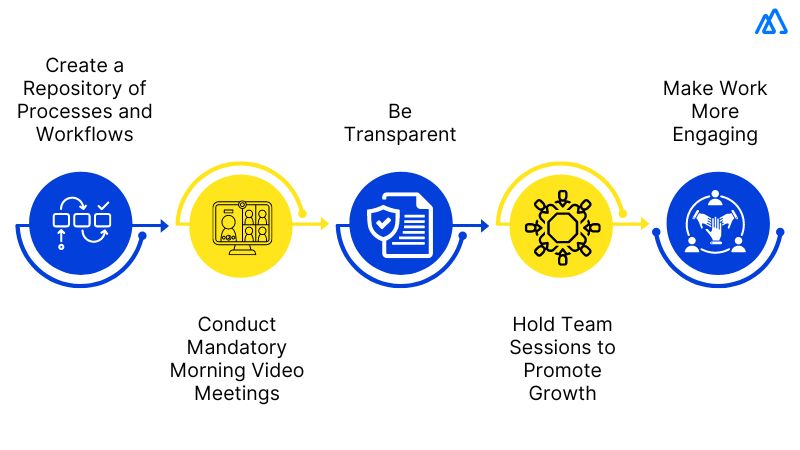
Create a Central Repository of Sales Processes and Workflows
When salespeople work remotely, they shouldn’t have to depend on a manager’s availability to understand how routine tasks should be completed.
A central repository of documented sales processes can make daily responsibilities easier to manage.
For example, your team may follow specific procedures for:
- Capturing and assigning new leads.
- Qualifying potential customers.
- Updating deal stages.
- Scheduling follow-up activities.
- Managing customer objections.
- Preparing quotations and proposals.
- Closing deals and handing over customers.
Documenting these processes gives employees a reliable reference whenever they need guidance.
It also helps new salespeople understand company expectations without relying entirely on repeated one-to-one explanations.
How to implement this:
- Identify the sales activities your team performs most frequently.
- Document the steps, responsibilities and expected outcomes for each activity.
- Store the information in a shared, accessible location.
- Assign responsibility for keeping each process updated.
- Encourage employees to suggest improvements based on their experience.
For example, if your team follows a standard process for qualifying new leads, document the questions to ask, qualification criteria and when to move an opportunity to the next stage.
A shared process ensures that employees follow consistent guidelines while retaining flexibility in how they communicate with customers.
Kylas Pro Tip: Use a CRM to standardise sales stages, maintain customer records and track follow-up activities. With Kylas Pipeline Management, teams can organise opportunities within defined stages and maintain visibility into the sales process.
Clear processes reduce unnecessary confusion and help remote employees work more independently.
Establish Meaningful Communication and Team Check-Ins
Regular communication is important for remote sales teams, but that doesn’t mean every interaction needs to become a long video meeting.
The purpose of team communication should be to share information, resolve challenges and help employees stay connected.
A short team check-in can help everyone understand current priorities and identify areas where support is needed.
For example, a sales manager could organise a brief meeting to discuss:
- The team’s main priorities.
- Important customer meetings or opportunities.
- Challenges requiring collaboration.
- Changes in sales processes or business priorities.
- Recent progress worth recognising.
However, not every update requires a meeting.
Routine information can often be shared through a CRM, team messaging platform or written update.
Find the Right Communication Frequency
Different conversations serve different purposes.
| Communication Type | Suggested Frequency | Purpose |
|---|---|---|
| Team check-in | Daily or a few times per week, based on team needs | Align priorities and discuss immediate blockers |
| One-to-one discussion | Weekly | Review progress, challenges and support requirements |
| Pipeline review | Weekly | Discuss opportunities, stalled deals and next steps |
| Team learning session | Fortnightly or monthly | Share knowledge and improve sales skills |
These are suggested routines, not mandatory schedules. Managers should adjust them according to team size, sales cycle and workload.
Also, avoid making cameras compulsory for every meeting. Video can be helpful for discussions and relationship building, but employees should have reasonable flexibility when it isn’t essential.
Sales Motivation Tip: Use team meetings to solve problems rather than simply collect status updates. Encourage employees to share concerns, ask questions and suggest improvements.
Meaningful communication builds connection without creating unnecessary interruptions.
Build Trust Through Transparency and Clear Expectations
One of the biggest challenges in managing a remote sales team is maintaining trust when managers and employees don’t interact face-to-face every day.
Employees need to understand what is expected of them, how performance is evaluated and what changes may affect their responsibilities.
When expectations are unclear, employees may spend too much time worrying about whether they’re meeting requirements rather than focusing on meaningful work.
Transparency helps reduce that uncertainty.
Ways to build transparency in remote sales teams:
- Communicate changes in targets, policies or business priorities clearly.
- Explain how individual responsibilities contribute to larger sales goals.
- Provide regular feedback instead of saving concerns for performance reviews.
- Be open about challenges that affect the team.
- Encourage employees to raise concerns without fear of unnecessary criticism.
- Evaluate people fairly, regardless of whether they work remotely or from the office.
For example, if quarterly sales targets change because of revised business priorities, explain the reason for the change and how the team will be supported.
This helps employees understand the context rather than interpreting the change as an unexplained increase in pressure.
Focus on Results, Not Constant Activity Monitoring
A salesperson’s performance shouldn’t be judged only by the time they appear online or the number of calls they make.
Activity metrics can be useful, but they need to be interpreted alongside sales quality and outcomes.
Consider tracking:
- Qualified opportunities created.
- Follow-up activities completed.
- Progress across pipeline stages.
- Customer meetings conducted.
- Deals closed.
- Revenue generated against relevant targets.
These metrics can help managers understand performance without relying on constant supervision.
With Kylas Reports and Dashboards, sales managers can review pipeline information, activities and sales performance through configurable reports.
Sales Motivation Tip: Make performance discussions collaborative. Ask employees what is helping them progress and what obstacles they need support with.
Trust develops when expectations are clear, feedback is constructive and employees are given reasonable autonomy.
Encourage Learning, Recognition and Career Growth
Salespeople are often motivated by opportunities to improve their skills, take on new responsibilities and progress in their careers.
Remote employees shouldn’t miss these opportunities simply because they aren’t physically present in the office.
Managers can make learning and development a regular part of team activities.
Conduct Collaborative Learning Sessions
Organise sessions where team members can share their experiences.
Topics could include:
- Handling common sales objections.
- Improving customer discovery calls.
- Writing effective follow-up emails.
- Understanding customer buying behaviour.
- Negotiating commercial terms.
- Managing complex sales opportunities.
- Learning from deals that didn’t close.
For example, a salesperson who recently handled a difficult negotiation could explain how they approached the conversation and what the team can learn from it.
These sessions don’t always need an external trainer. Employees can learn a great deal from each other’s practical experiences.
Recognise Progress Beyond Closed Deals
Sales recognition shouldn’t focus exclusively on the person who generates the most revenue.
Managers can also acknowledge behaviours that contribute to long-term sales performance.
Examples include:
- Successfully reviving a stalled opportunity.
- Helping a teammate solve a customer problem.
- Improving qualification quality.
- Delivering a strong product demonstration.
- Maintaining consistent and relevant customer follow-ups.
- Sharing a useful process improvement.
Recognition should be specific and genuine rather than automatic or excessive.
For instance, instead of saying, “Great work this week,” a manager could say:
“Your follow-up plan helped move an important opportunity forward, and the notes you shared made it easier for the team to support the next conversation.”
Specific recognition helps employees understand which contributions are valued.
Sales Motivation Tip: Include professional development in regular one-to-one discussions. Ask employees which skills they want to improve and identify opportunities to practise them.
When people feel their efforts are recognised and their careers are progressing, they have more reasons to stay engaged with their work.
Make Daily Sales Work More Engaging and Collaborative
Salespeople generally spend their time understanding customer needs, building relationships and finding suitable solutions.
However, repetitive administrative work and disconnected processes can make daily responsibilities feel unnecessarily complicated.
Remote sales managers can improve the experience by helping teams spend more time on meaningful sales activities.
Start by understanding which tasks take up the most time.
These might include:
- Manually updating customer information.
- Preparing repetitive status reports.
- Tracking follow-ups across multiple tools.
- Searching for previous customer conversations.
- Coordinating handovers between colleagues.
Once you’ve identified these activities, review whether they can be simplified, standardised or automated.
Encourage Team Collaboration on Customer Challenges
Make room for discussions about real sales opportunities.
For example, if several prospects are raising similar objections, bring the team together to understand the pattern.
Ask questions such as:
- Are we addressing the customer’s actual concerns?
- Is our product explanation clear enough?
- Do we need better supporting material?
- Are we targeting the right customer segments?
- What can we improve in the next conversation?
These discussions make work more collaborative and give employees an opportunity to contribute ideas.
Use Technology to Reduce Administrative Friction
A CRM can help organise sales activities and customer information so employees don’t need to manage everything manually.
For example, Kylas CRM provides features for lead management, activity tracking, pipeline visibility and team collaboration.
Its Collaboration features also support shared notes, task management, reminders and team coordination.
Depending on the plan and configuration, suitable workflows can help automate repetitive activities.
Sales Motivation Tip: Ask employees which administrative tasks they find most time-consuming. Use their feedback to identify practical opportunities for process improvement.
Technology should support better sales conversations and teamwork, not simply add another layer of reporting.
How Can a CRM Help Manage a Remote Sales Team?
Remote sales management requires visibility into customer interactions and team progress without depending entirely on meetings or manual updates.
A Customer Relationship Management (CRM) system brings relevant sales information together and helps teams maintain continuity across locations.
Here are some ways a CRM can support remote sales management:
| Remote Sales Challenge | How a CRM Can Help |
|---|---|
| Limited visibility into opportunities | Track leads and deals through defined pipeline stages |
| Missed follow-ups | Maintain tasks, reminders and activity records |
| Information scattered across platforms | Organise relevant customer and opportunity details |
| Difficulty coordinating teams | Share notes, activities and deal information |
| Time-consuming reporting | Use dashboards to review sales activities and performance |
| Repetitive administrative tasks | Use available workflow capabilities where appropriate |
For example, with Kylas CRM features, managers can review relevant sales information while employees continue managing their assigned opportunities.
This reduces the need to request the same updates repeatedly and gives salespeople more time to focus on customers.
However, CRM software alone cannot motivate a sales team. Clear expectations, supportive managers, appropriate workloads and recognition remain essential.
The value of CRM lies in making sales processes more organised, accessible and consistent.
How Do You Measure Remote Sales Team Motivation and Performance?
Motivation isn’t something that can be measured accurately through sales numbers alone.
A team might meet its targets while experiencing excessive workload, or miss a target because of market conditions rather than a lack of effort.
Managers should therefore evaluate both sales performance and employee experience.
Sales Performance Indicators
These may include:
- Qualified leads generated.
- Opportunities progressing through pipeline stages.
- Follow-up completion.
- Sales conversion rates.
- Revenue against targets.
- Sales cycle length.
Employee Experience Indicators
These may include:
- Feedback from regular one-to-one conversations.
- Employee participation in learning and development.
- Recurring workload concerns.
- Access to coaching and support.
- Team collaboration and communication quality.
- Employee engagement survey feedback.
The objective is to identify patterns and take constructive action.
For example, if pipeline activity is declining and several employees report unclear priorities, the manager may need to review expectations and processes before introducing new incentives.
Balanced performance reviews help managers make more informed decisions.
Common Mistakes to Avoid When Motivating Remote Sales Teams
Even well-intentioned managers can introduce practices that make remote work unnecessarily difficult.
Some common mistakes include:
- Scheduling too many meetings: Frequent interruptions can leave employees with less time for customer conversations and focused work.
- Expecting constant availability: Employees need clear working hours and reasonable response-time expectations.
- Monitoring activity without context: Calls and emails don’t always reflect the quality or complexity of sales work.
- Recognising only top performers: Teamwork, learning and steady improvement also deserve acknowledgement.
- Ignoring individual needs: Different employees may require different levels of coaching, structure and independence.
- Using technology only for supervision: CRM tools should help employees work effectively, not create unnecessary pressure.
Avoiding these mistakes can help create a more supportive and productive remote working environment.
FAQs
1. How Do You Motivate a Remote Sales Team?
You can motivate a remote sales team by setting clear expectations, maintaining regular communication, providing coaching, recognising achievements and supporting career development. Organised processes and appropriate sales tools can also help employees manage their responsibilities more effectively.
2. What Are the Biggest Challenges in Managing Remote Sales Teams?
Common challenges include limited face-to-face communication, unclear priorities, reduced informal collaboration, difficulty identifying employee concerns and maintaining work-life boundaries. Managers can address these challenges through structured communication, clear processes and supportive leadership.
3. How Often Should Remote Sales Teams Have Meetings?
Meeting frequency should depend on team requirements and the complexity of the sales process. Brief check-ins may be useful for daily coordination, while weekly one-to-one conversations and pipeline reviews can support coaching and performance discussions. Avoid meetings that simply repeat information already available in the CRM.
4. How Can Sales Managers Build Trust With Remote Employees?
Sales managers can build trust by communicating expectations clearly, providing constructive feedback, recognising contributions and giving employees reasonable autonomy. Performance should be evaluated fairly through relevant outcomes rather than constant online monitoring.
5. How Can You Improve Remote Sales Team Productivity?
Remote sales team productivity can be supported through clear priorities, streamlined processes, regular coaching and tools that reduce repetitive administrative work. Managers should also protect time for customer conversations and review whether meetings and reporting requirements are genuinely useful.
6. What Role Does a CRM Play in Remote Sales Management?
A CRM helps remote sales teams organise customer information, track opportunities, coordinate activities and monitor sales progress. It gives managers and employees access to relevant information without relying exclusively on manual status updates or repeated meetings.
7. How Can You Keep Remote Sales Employees Engaged Long-Term?
Long-term engagement requires more than occasional incentives. Managers should provide regular feedback, meaningful recognition, opportunities for career development, manageable workloads and a sense of connection with the team. Employees should also have opportunities to contribute ideas and improve existing processes.
Conclusion
Motivating a remote sales team isn’t about recreating every part of the office environment through video calls and constant check-ins.
It’s about building a working environment where employees understand their responsibilities, receive timely support and feel connected to the team’s progress.
Clear processes, meaningful communication, transparent leadership, continuous learning and engaging work can help salespeople stay focused and confident, regardless of where they work.
With the right management practices and an organised CRM, remote sales teams can spend less time navigating disconnected processes and more time building customer relationships.
Looking for a better way to organise your sales operations? Explore Kylas CRM to see how pipeline management, team collaboration and reporting can support your remote sales team.