









What Is Customer Retention and Why Is It Important for Small Business Growth?
Posted on September 29, 2026 by Vikram Kotnis
Acquiring new customers is important for business growth, but sustainable growth also depends on what happens after the first sale. Can you keep customers engaged, deliver consistent value, and give them reasons to continue doing business with you?
That is where customer retention comes in.
Customer retention is a business’s ability to keep existing customers engaged and encourage them to continue purchasing its products or services over time. A strong customer retention strategy focuses on building relationships, improving customer experience, reducing customer churn, and increasing repeat purchases.
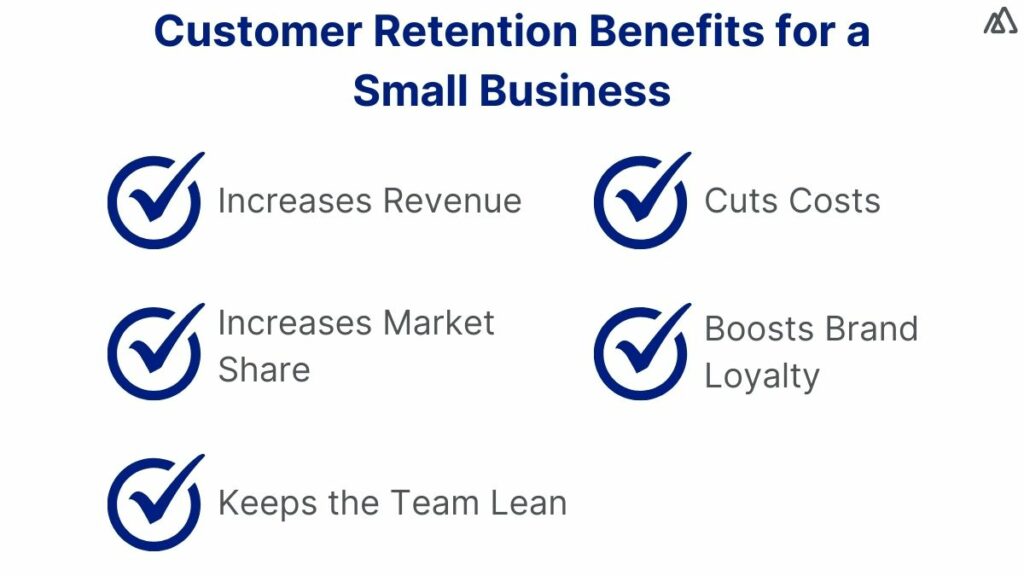
For small businesses, customer retention can be particularly important because every customer relationship represents an opportunity to generate repeat business, improve customer lifetime value, and build advocacy.
What Is Customer Retention?
Customer retention refers to the strategies and actions a business uses to encourage existing customers to continue their relationship with the company instead of switching to competitors.
In simple terms, customer retention measures how effectively a business keeps its customers over a particular period.
Retention can result from several factors, including:
- Consistent product or service quality
- Positive customer experiences
- Responsive customer support
- Personalized communication
- Effective onboarding
- Timely follow-ups
- Loyalty and reward programs
- Continuous delivery of customer value
Customer retention should not begin only when a customer is about to leave. It should be considered throughout the customer lifecycle, from initial engagement and conversion to onboarding, support, repeat purchases, and long-term loyalty.
Why Is Customer Retention Important?
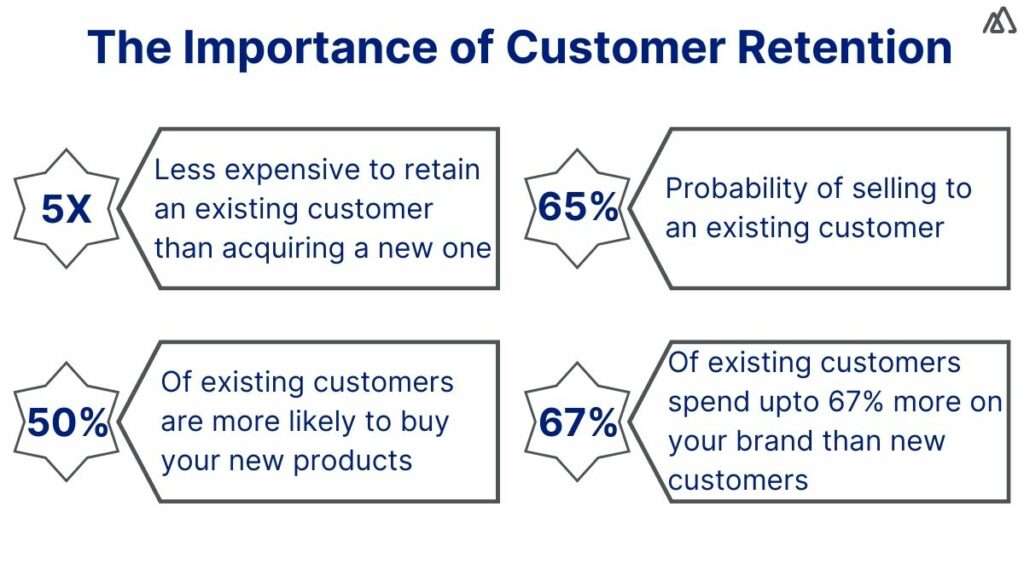
Businesses often dedicate significant resources to generating leads and converting new customers. Once a customer has been acquired, however, the relationship should not end with the first transaction.
Existing customers already know your business, have experience with your products or services, and require less introduction to your value proposition.
A successful customer retention strategy can therefore contribute to several areas of business growth.
Generate More Revenue From Existing Customers
Existing customers can create opportunities for repeat purchases, renewals, upgrades, upselling, and cross-selling.
For example, a customer who initially purchases one service may later require an additional service. Similarly, a software customer using an entry-level plan may eventually require more features as their business grows.
Maintaining a strong relationship makes it easier for businesses to identify these opportunities at the appropriate time.
Make Customer Acquisition Efforts More Valuable
Customer acquisition requires investment in marketing, lead generation, sales conversations, demonstrations, nurturing, and follow-ups.
If customers leave shortly after converting, businesses have to continuously replace them with new customers.
Retention allows businesses to generate more long-term value from customers they have already acquired.
This does not mean businesses should choose retention over acquisition. Sustainable growth typically requires both.
Customer Retention vs Customer Acquisition
Customer acquisition and customer retention address different stages of business growth.
| Customer Retention | Customer Acquisition |
| Focuses on existing customers | Focuses on attracting new customers |
| Encourages repeat business | Generates first-time customers |
| Helps reduce customer churn | Expands the customer base |
| Can increase customer lifetime value | Creates new revenue opportunities |
| Focuses on long-term relationships | Focuses on initial conversion |
Customer acquisition helps bring customers into the business, while customer retention helps businesses maintain and expand those relationships.
Improve Customer Lifetime Value
Customer lifetime value (CLV) represents the value a customer generates for a business throughout the duration of the relationship.
When customers continue purchasing for longer periods, their lifetime value can increase.
Understanding CLV can also help small businesses determine which customer segments deserve additional attention and which retention activities are generating meaningful business value.
Reduce Customer Churn
Customer churn occurs when customers stop doing business with a company.
Some churn may be unavoidable, but businesses should understand why customers leave.
Common reasons may include:
- Poor customer service
- Unresolved problems
- Lack of communication
- Inconsistent experiences
- Changing customer requirements
- Better alternatives
- Lack of perceived value
Tracking customer churn and its causes can help businesses identify recurring issues and take corrective action.
Create Opportunities for Customer Advocacy
A satisfied repeat customer can contribute more than another transaction.
Customers who consistently have positive experiences may also:
- Recommend the business to others
- Leave reviews or testimonials
- Refer potential customers
- Share positive experiences
- Become long-term brand advocates
This makes customer experience and retention closely connected with reputation and word-of-mouth growth.
Customer Retention vs Customer Loyalty: What’s the Difference?
Customer retention and customer loyalty are related, but they are not the same.
Customer retention measures whether customers continue purchasing from your business.
Customer loyalty describes a customer’s preference or commitment toward your brand.
For example, a customer may continue purchasing from a company because it is convenient. That customer is retained, but they may still switch if a more convenient alternative becomes available.
A loyal customer has a stronger preference for the brand and may continue choosing it despite competing alternatives.
An effective retention strategy can help turn repeat customers into loyal customers by consistently delivering positive experiences.
How Do You Measure Customer Retention?
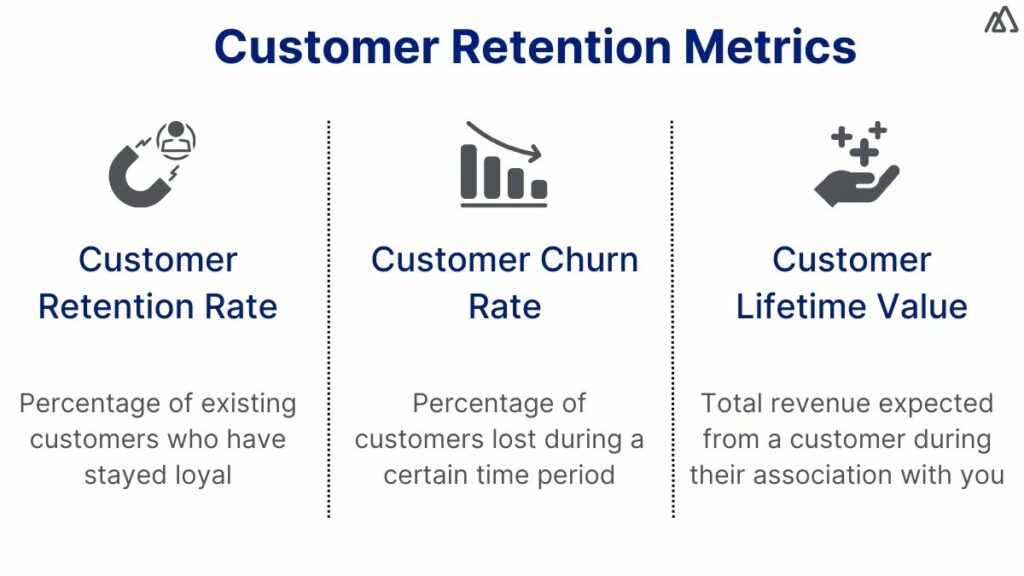
Customer retention should be measured rather than treated as an abstract goal.
Three useful customer retention metrics are:
- Customer Retention Rate
- Customer Churn Rate
- Customer Lifetime Value
Customer Retention Rate
Customer retention rate (CRR) measures the percentage of existing customers a business retains during a specific period.
You need three values:
- S: Customers at the start of the period
- E: Customers at the end of the period
- N: New customers acquired during the period
Customer Retention Rate = ((E − N) ÷ S) × 100
Customer Retention Rate Example
Suppose a business starts the month with 200 customers.
During the month:
- It acquires 30 new customers.
- It ends the month with 210 customers.
The retention rate would be:
((210 − 30) ÷ 200) × 100 = 90%
Therefore, the business retained 90% of the customers it had at the beginning of the period.
Customer Churn Rate
Customer churn rate measures the percentage of customers lost during a specific period.
A basic formula is:
Customer Churn Rate = (Customers Lost During the Period ÷ Customers at the Beginning of the Period) × 100
For example, if a business begins a month with 200 customers and loses 20:
(20 ÷ 200) × 100 = 10% churn rate
Tracking churn over time helps businesses understand whether retention is improving or declining.
Customer Lifetime Value
Customer lifetime value estimates the total value a customer generates throughout their relationship with a business.
The appropriate CLV formula can vary depending on the business model, but the objective remains the same: understand the long-term value of customer relationships rather than looking only at individual transactions.
Businesses can use CRM reporting and customer data to identify patterns in customer behaviour, sales activity, and relationship value.
How to Improve Customer Retention: 8 Strategies for Small Businesses
Customer retention is not the responsibility of one department. Sales, customer service, operations, and management can all influence whether customers continue doing business with you.
Here are practical customer retention strategies small businesses can implement.
Make Customer Retention Part of Your Business Culture
Customer retention should not begin when churn becomes a problem.
Instead, businesses should think about retention from the beginning of the customer relationship.
Sales representatives should understand customer expectations before closing a deal. Operations teams should know what has been promised. Customer-facing teams should have access to the information necessary to provide consistent experiences.
This creates continuity across the customer journey.
Deliver a Consistent Customer Experience
Customers should not receive completely different experiences depending on which employee or department they interact with.
Create clear processes for:
- Customer onboarding
- Follow-ups
- Complaint resolution
- Escalations
- Renewals
- Account management
Standardized processes help teams maintain consistency while still allowing personalized interactions.
Understand Why Customers Stay and Why They Leave
Businesses often spend considerable time understanding why prospects convert but much less time understanding why existing customers leave.
Speak regularly with customer-facing teams and review customer feedback.
Ask questions such as:
- Why do customers make repeat purchases?
- What problems are customers experiencing?
- At what point are customers leaving?
- Which customer segments have the strongest retention?
- Which complaints appear repeatedly?
- What do long-term customers value most?
These insights can help identify both successful retention drivers and potential churn risks.
Personalize Customer Communication
Not every customer should receive exactly the same communication.
Customer data can help businesses segment customers according to factors such as:
- Purchase history
- Product interest
- Engagement
- Account stage
- Previous conversations
This makes it possible to deliver more relevant follow-ups, offers, reminders, and recommendations.
A CRM can support this process by giving teams a centralized view of customer information and interaction history.
Automate Important Follow-Ups
Manual follow-ups become difficult as a business grows.
Customers can easily be forgotten when information is distributed across spreadsheets, inboxes, messaging applications, and individual employees.
Sales automation can help businesses create workflows for recurring activities such as emails, tasks, alerts, and customer follow-ups.
Automation should support human relationships rather than replace them. The objective is to make sure important customer interactions happen consistently and at the right time.
Build a Strong Customer Feedback Loop
Customer feedback should lead to action.
Businesses can collect feedback through:
- Surveys
- Customer calls
- Support conversations
- Reviews
- Account-management meetings
- Post-purchase communication
Look for patterns rather than treating every response independently.
If several customers repeatedly mention the same problem, it may indicate a broader issue with the product, service, communication, or process.
Reward Repeat Customers
Businesses can encourage repeat engagement through retention or loyalty initiatives.
Depending on the business model, these might include:
- Loyalty benefits
- Referral rewards
- Exclusive offers
- Early access to new products
- Renewal benefits
- Personalized recommendations
The objective is not simply to provide discounts. A good retention program should provide customers with additional value for maintaining their relationship with the business.
Review Your Retention Strategy Regularly
Customer expectations change, so retention strategies should evolve as well.
Review customer retention metrics monthly or quarterly and identify:
- Changes in retention rate
- Changes in churn rate
- Common churn reasons
- Repeat purchase behaviour
- Customer feedback patterns
- Upselling and cross-selling opportunities
Use those findings to continuously refine your strategy.
How Can CRM Help Improve Customer Retention?
As a business grows, customer information can become fragmented across spreadsheets, emails, calls, notes, and different team members.
A sales CRM provides a centralized system for managing customer information and interactions.
CRM can support customer retention in several ways.
Maintain a Complete Customer History
Teams can maintain records of customer information, conversations, activities, and deals in one place.
This gives customer-facing employees more context before communicating with an existing customer.
Automate Customer Follow-Ups
CRM workflows can automate repetitive activities such as reminders, emails, task creation, and other follow-up processes.
This reduces the likelihood of important customer interactions being missed.
Identify Customer Trends
CRM reports can help teams identify patterns in sales, customer activity, repeat business, and account performance.
These insights can help businesses determine which customer relationships require attention.
Personalize Customer Interactions
When employees understand previous conversations and customer requirements, they can make communication more relevant.
This helps create a more consistent customer experience across multiple interactions.
Manage the Entire Customer Lifecycle
CRM should not be limited to lead generation.
Businesses can use CRM to manage the customer lifecycle, including acquisition, conversion, onboarding, retention, loyalty, and repeat business.
Customer Retention Checklist for Small Businesses
If you’re building a customer retention strategy, start with these questions:
- Do we know our current customer retention rate?
- Do we track customer churn?
- Do we know why customers leave?
- Are customer interactions stored centrally?
- Do we consistently follow up after a sale?
- Can our teams see previous customer interactions?
- Do we collect customer feedback?
- Do we act on recurring customer complaints?
- Do we identify upselling and cross-selling opportunities?
- Do we review retention metrics regularly?
If several answers are “no,” those areas can become starting points for improving your retention strategy.
Final Thoughts
Customer retention is not simply about preventing customers from leaving. It is about continuously giving customers reasons to maintain their relationship with your business.
For small businesses, that means understanding customers, delivering consistent experiences, responding to their needs, collecting feedback, and maintaining meaningful communication after the initial sale.
As the customer base grows, managing those relationships manually becomes increasingly difficult. Using a CRM can help centralize customer information, automate important activities, and provide teams with the visibility they need to maintain stronger customer relationships.
Kylas helps growing businesses organize customer information, manage sales activities, automate workflows, and maintain visibility across customer interactions. Businesses looking to strengthen their customer relationship processes can explore Kylas CRM to understand how these capabilities fit into their sales and retention strategy.
FAQs
What is customer retention?
Customer retention is the ability of a business to keep its existing customers over time. It involves strategies that encourage repeat purchases, continued engagement, and long-term customer relationships.
Why is customer retention important for small businesses?
Customer retention can help small businesses generate repeat business, increase customer lifetime value, reduce customer churn, and build stronger customer relationships.
How is customer retention rate calculated?
Customer retention rate can be calculated using:
((Customers at End of Period − New Customers Acquired) ÷ Customers at Start of Period) × 100)
The result shows the percentage of existing customers retained during the period.
What is the difference between customer retention and customer acquisition?
Customer acquisition focuses on gaining new customers, while customer retention focuses on keeping existing customers and encouraging repeat business. Growing businesses typically need strategies for both.
What is the difference between customer retention and customer loyalty?
Customer retention measures whether customers continue purchasing from a business. Customer loyalty describes a customer’s stronger preference or commitment toward a particular brand.
How can small businesses improve customer retention?
Small businesses can improve customer retention by delivering consistent customer experiences, providing responsive support, personalizing communication, collecting feedback, automating important follow-ups, monitoring churn, and rewarding repeat customers.
How does CRM help with customer retention?
CRM helps businesses centralize customer data, track interactions, automate follow-ups, analyze customer activity, and provide employees with context for more personalized customer communication.
What are the most important customer retention metrics?
Three useful metrics are customer retention rate, customer churn rate, and customer lifetime value. Businesses may also monitor repeat purchase rate, renewal rate, and customer engagement depending on their business model.