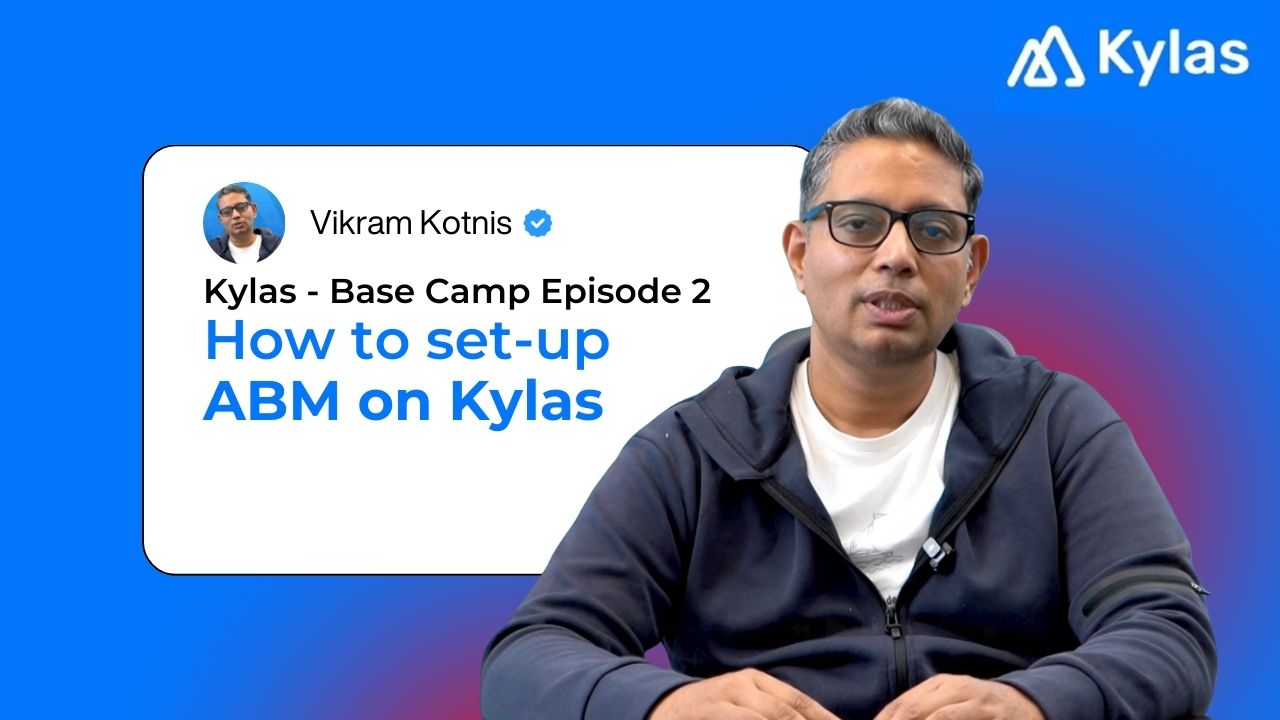











Intermediate Episode 5: How to Set Up Activities in Sales Processes
Posted on December 2, 2025 by Vikram Kotnis
In the dynamic world of sales, it’s not just about having the right product or service. It’s about having the right processes in place that ensure efficiency and predictability. Hi, I’m Vikram Kotnis, Founder & CEO of Kylas, and today I’ll be explaining how to set up the sales process within your CRM system to ensure your business is on track for growth.
Many businesses make the mistake of setting up a CRM without a clear process. In fact, the number one mistake I see is businesses not considering automation in their sales process, relying solely on manual efforts. Setting up your sales activities with the right automation tools will not only save time but ensure you are consistently closing more deals.
Start with a Solid Sales Framework
Before diving into CRM configurations, it’s crucial to set a sales framework. A key part of this framework is the sales funnel or the sales stages, which will help guide your prospects from the first point of contact to the final sale. The process of breaking down these stages into clear, actionable steps is what differentiates high-performing sales teams.
For example, your sales pipeline can be divided into stages such as:
- Lead Generation – How do you attract new leads? What are the sources?
- Lead Qualification – What defines a qualified lead?
- Demo Scheduled – How do you schedule demos with the leads?
- Proposal Sent – When do you send the proposal?
- Negotiation – How do you follow up on the proposal and move towards closing?
- Closed – When is the deal considered done?
By defining each of these stages clearly, you’ll be able to optimize your CRM’s pipeline setup and ensure everything is tracked effectively.
Integrating Automation in Your Sales Process
Sales automation is about using technology to handle repetitive tasks, allowing your sales team to focus on high-value activities. This includes automating follow-ups, nurturing leads, and scheduling meetings.
One critical area where automation is essential is in lead routing. You need to ensure that leads are being assigned to the right salesperson based on factors such as geography, deal size, or expertise. Automated workflows should be set up so that once a lead enters the system, it is automatically assigned to the appropriate salesperson for faster follow-up.
Another key element is automating task assignments. For example, once a lead is assigned to a sales rep, an automatic task should be created in the CRM, notifying the rep of the next action to be taken. This prevents any potential lead from slipping through the cracks due to forgetfulness or inefficiency.
Setting Up SOPs (Standard Operating Procedures)
A common mistake that businesses make is not clearly defining the roles and actions required by their sales teams at each stage. You need to create SOPs for your sales process. This includes defining how your salespeople should approach each stage of the sales process.
For instance, once a demo is completed, the SOP should define the actions that need to follow, such as sending out the proposal, scheduling the next follow-up, or asking for feedback. By clearly defining these steps and incorporating them into your CRM, your team will always know the next step in the process and won’t miss a beat.
Moreover, AI-powered workflows can help you define your SOPs by automatically taking actions based on certain triggers. For example, after a demo, an AI-based workflow can automatically send a thank-you message or follow-up email, making sure that no customer is left waiting for too long.
Optimizing Your Lead Scoring System
Lead scoring is essential for determining which leads are worth pursuing and which ones should be deprioritized. With a well-set-up CRM, you can use automation to score leads based on their behavior and engagement with your brand.
At Kylas, we leverage AI-driven lead scoring, which automatically assigns scores to leads based on a variety of factors, including:
- Interaction with emails
- Opened demo requests
- Calls made or received
- WhatsApp conversations
This means your team can focus on leads with the highest potential and avoid wasting time on those that are less likely to convert.
Creating Real-Time, Actionable Reports
Once you’ve set up your CRM and your sales processes, it’s time to make sure you can measure your success. One of the greatest benefits of having an automated CRM system is the ability to generate real-time, actionable reports.
Reports should not just be a collection of data. They should give insights into how well your pipeline is performing. At Kylas, we help businesses track metrics like lead conversion rates, funnel velocity, and drop-offs at every stage of the sales process. With these reports, you can quickly identify where bottlenecks are happening, tweak your approach, and optimize for better outcomes.
Additionally, with custom dashboards, you can get a quick snapshot of your performance at any time. Whether it’s the number of leads converted or the average deal size, your CRM’s dashboard will give you the clarity needed to make faster decisions.
Review, Optimize, and Scale
Once your CRM is set up and your sales team is following the processes, the next step is constant optimization. This involves regularly reviewing your pipeline, analyzing your reports, and adjusting your activities to ensure that you’re hitting your targets.
For example, if you notice that there’s a high drop-off between the proposal and negotiation stages, you might want to increase the level of communication and engagement during that period. This could mean sending more personalized follow-ups, offering a discount, or adding more value in the form of case studies or testimonials.
The goal is to continuously optimize and scale your sales operations. The more streamlined and predictable your process becomes, the faster you can scale without losing control.
Conclusion
Setting up your sales activities in CRM is not just about recording data; it’s about creating a system that drives growth. With clear SOPs, automated workflows, lead scoring, and real-time reports, you can significantly improve your sales efficiency.
The key takeaway here is that sales success relies on two things:
- Efficiency: Automating repetitive tasks and eliminating bottlenecks in your process.
- Predictability: Defining clear KPIs, reporting metrics, and using AI to make smarter decisions.
Once you integrate these elements into your CRM setup, you will have a growth engine that drives more conversions and boosts your bottom line.
At Kylas, we’ve designed our platform with these principles in mind to help SMBs achieve scalable growth with enterprise-level CRM features at an affordable price.
So, take the time to set up your sales process correctly. It’s not just about using a CRM; it’s about using it to make your sales process more efficient, predictable, and ultimately, more profitable. Happy selling!